

Nova Scotia Mechanical & Ethics/Regulatory 30 PDH Discount Package
Heat Transfer (M03-001)
Fluid Flow (M06-001)
Heat Exchangers (M02-001)
Centrifugal and Positive Displacement Pumps (M03-002)
Fire Protection Systems (M04-051)
How to Calculate the True Cost of Steam (D01-003)
General Principles of Engineering Ethics & Statutes for Nova Scotia Professional Engineers (NS3-001)

This online engineering PDH course discusses the fundamentals of thermodynamics which is the study of the relationship between heat and mechanical work; it is a branch of both physics and engineering science. This course analyzes the effects of changes in temperature, pressure and volume on physical systems at a macroscopic scale. It also explains how energy balances can be performed on facility systems and how efficiency can be calculated.
This 8 PDH online course is applicable to mechanical and chemical engineers, facility operators, maintenance personnel, and other technical staff who are interested in understanding the fundamentals of thermodynamics.
This P.Eng. continuing education course is intended to provide you with the following specific knowledge and skills:
- Understanding thermodynamic properties
- Performing temperature and pressure measurements
- Learning the characteristics of energy, work, and heat
- Understanding thermodynamic systems and processes
- Understanding the change of phase
- Familiarizing with property diagrams and steam tables
- Knowing first and second law of thermodynamics
- Understanding compression processes
In this professional engineering CEU course, you need to review Volume 1 of the Department of Energy Publication DOE-HDBK-1012/1-92, "Thermodynamics" published by the Department of Energy.
Upon successful completion of the quiz, print your Certificate of Completion instantly. (Note: if you are paying by check or money order, you will be able to print it after we receive your payment.) For your convenience, we will also email it to you. Please note that you can log in to your account at any time to access and print your Certificate of Completion.
This online engineering PDH course presents the fundamentals of Heat Transfer which is the study of thermal energy in transit due to temperature difference. Heat Transfer is a basic branch in thermal sciences which explains how heat is transferred by conduction, convection and thermal radiation. This course also explains how specific parameters can affect the rate of heat transfer.
This 3 PDH online course is applicable to mechanical and chemical engineers, nuclear facility operators, maintenance personnel, and other technical staff who are interested in understanding the mechanics of heat transfer.
This P.Eng. continuing education course is intended to provide you with the following specific knowledge and skills:
- Learning heat transfer terminology
- Understanding conduction heat transfer
- Understanding convection heat transfer
- Understanding radiant heat transfer
- Performing heat transfer design calculations
In this professional engineering CEU course, you need to review Volume 2 of the Department of Energy Publication DOE-HDBK-1012/1-92, "Thermodynamics, Heat Transfer and Fluid Flow".
Upon successful completion of the quiz, print your Certificate of Completion instantly. (Note: if you are paying by check or money order, you will be able to print it after we receive your payment.) For your convenience, we will also email it to you. Please note that you can log in to your account at any time to access and print your Certificate of Completion.
This online engineering PDH course discusses the fundamentals of Fluid Flow which is the study of the relationship between the different types of energy in a fluid stream through the use of Bernoulli's equation. The course also discusses the causes of head loss in fluid systems and what factors affect head loss.
This 6 PDH online course is applicable to mechanical and chemical engineers, nuclear facility operators, maintenance personnel, and other technical staff who are interested in understanding the mechanics of fluid flow.
This P.Eng. continuing education course is intended to provide you with the following specific knowledge and skills:
- Understanding the Continuity Equation
- Understanding Laminar and Turbulent Flow
- Learning Bernoulli's Equation
- Knowing Head Loss
- Understanding Natural Circulation
- Familiarizing with the different phases of Fluid Flow
- Understanding Centrifugal Pumps
In this professional engineering CEU course, you need to review Volume 3 of DOE-HDBK-1012/1-92, "Thermodynamics, Heat Transfer and Fluid Flow" published by the Department of Energy.
Upon successful completion of the quiz, print your Certificate of Completion instantly. (Note: if you are paying by check or money order, you will be able to print it after we receive your payment.) For your convenience, we will also email it to you. Please note that you can log in to your account at any time to access and print your Certificate of Completion.
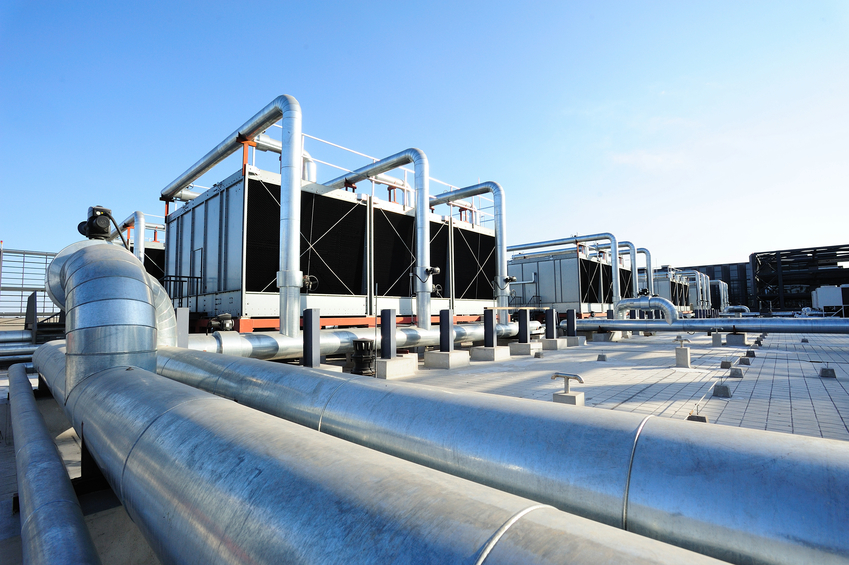
This online engineering PDH course describes the construction of plate heat exchangers as well as tube and shell heat exchangers. It also describes the flow patterns and temperature profiles in parallel flow, counter flow, and cross flow heat exchangers.
The transfer of thermal energy between fluids is one of the most important and frequently used processes in engineering. The transfer of heat is usually accomplished by means of a device known as a heat exchanger. Common applications of heat exchangers include boilers, fan coolers, cooling water heat exchangers, and condensers.
This 2 PDH online course is applicable to mechanical and chemical engineers, nuclear facility operators, maintenance personnel, and technical staff to fully understand the impact that their actions may have on the safe and reliable operation of facility components and systems.
This P.Eng. continuing education course is intended to provide you with the following specific knowledge and skills:
- Understanding the purpose of heat exchangers
- Learning the different types of heat exchangers
- Understanding heat exchanger applications
In this professional engineering CEU course, you need to review DOE-HDBK-1018/1-93, Volume 1, Module 2 of "Mechanical Science" published by the Department of Energy.
Upon successful completion of the quiz, print your Certificate of Completion instantly. (Note: if you are paying by check or money order, you will be able to print it after we receive your payment.) For your convenience, we will also email it to you. Please note that you can log in to your account at any time to access and print your Certificate of Completion.
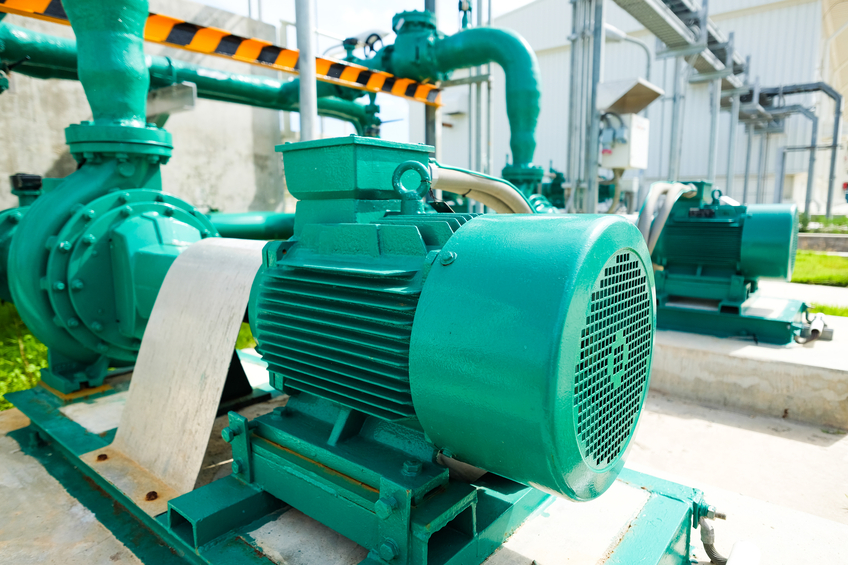
This online engineering PDH course explains the operation of centrifugal and positive displacement pumps. In general a pump is a mechanical device that is used to raise the flow of a fluid from one elevation to the other by increasing the pressure of the fluid.
Centrifugal pumps use a centripetal force, which is defined as the action that causes the fluid to move away from its center of rotation. Where as positive displacement pumps physically entrap a quantity of liquid at the suction of the pump and push that quantity out the discharge of the pump.
This 3 PDH online course is applicable to mechanical engineers, plant operators, maintenance personnel, and technical staff who are interested in gaining a better understanding centrifugal and displacement pump design and operation.
This P.Eng. continuing education course is intended to provide you with the following specific knowledge and skills:
- Learning the principle of operation of centrifugal and positive displacement pumps
- Learning the types and components of centrifugal and positive displacement pumps
- Understanding cavitation and cavitation prevention measures
- Performing Net Positive Suction Head calculations
- Understanding the characteristic curves of centrifugal and positive displacement pumps
- Understanding the protection methods of centrifugal and positive displacement pumps
In this professional engineering CEU course, you need to review DOE-HDBK-1018/1-93, Volume 1, Module 3 of Mechanical Science" published by the Department of Energy.
Upon successful completion of the quiz, print your Certificate of Completion instantly. (Note: if you are paying by check or money order, you will be able to print it after we receive your payment.) For your convenience, we will also email it to you. Please note that you can log in to your account at any time to access and print your Certificate of Completion.
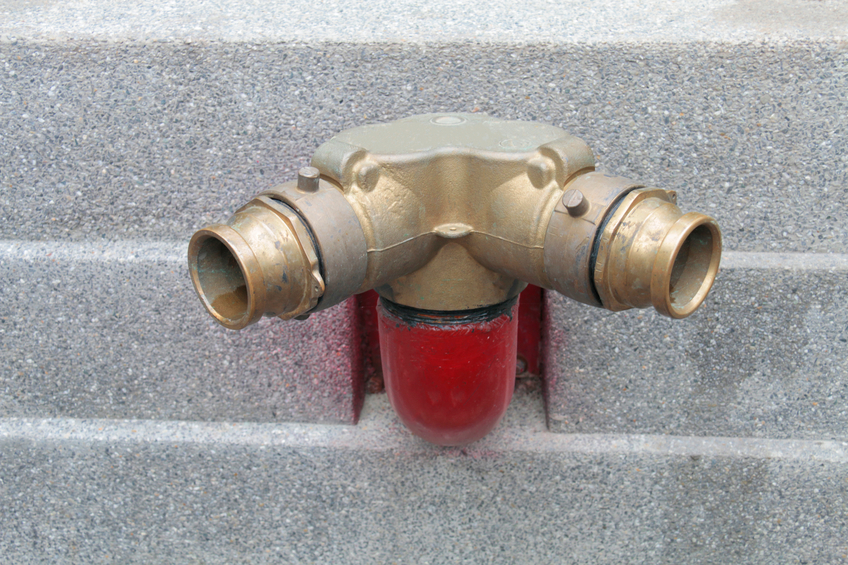
This online engineering PDH course provides information on the different types of fire protection systems and presents guidelines for periodic inspection and maintenance procedures of these systems.
Fire protection systems are designed to extinguish fires as quick as possible to prevent the loss of lives and property. When fire suppression systems are installed, the system would control, put out any fire that may result and signal the fire department. However, in the absence of similar systems, any building could be severely damaged or completely destroyed before the fire department could respond.
There are several types of fire protection systems. Each system is designed to serve in specific locations and has its unique components and functioning characteristics. And in order to ensure that these systems are safe and reliable, periodic inspection and maintenance of their components is required.
This 4 PDH online course is applicable to engineers who are interested in learning more about fire protection systems and the inspection and maintenance procedures for a safe and a reliable performance.
This P.Eng. continuing education course is intended to provide you with the following specific knowledge and skills:
- Familiarizing with the general features of fire protection systems
- Learning about the different types of automatic sprinkler systems and their characteristics
- Understanding the placement and distribution of components along the system networks
- Understanding the inspection and maintenance requirements of various components
- Learning about the practicality and characteristics of gaseous extinguishing systems
- Gaining a general overview of dry chemical extinguishing systems
Upon successful completion of the quiz, print your Certificate of Completion instantly. (Note: if you are paying by check or money order, you will be able to print it after we receive your payment.) For your convenience, we will also email it to you. Please note that you can log in to your account at any time to access and print your Certificate of Completion.

This online engineering CPD course provides a comprehensive overview of methods to find the true cost of steam.
In industrial manufacturing facilities, process heating accounts for an average of more than 60% of thermal energy use, predominantly in the form of steam. Process heating also accounts for a significant portion of controllable operating costs. It is one of the few areas of opportunity where management can reduce operating costs and improve profits. This course examines different methods to calculate the cost of steam and compares the results showing how the model method is a recommended approach.
This 1 CPD online course is applicable to industrial engineers, plant engineers and other technical professionals who are interested in learning more about how to calculate the true cost of steam.
This continuing education course is intended to provide you with the following specific knowledge and skills:
- Familiarizing with the basics of steam cost generation
- Understanding different ways to find the cost of steam generation
- Learning about simulation models to calculate the steam cost
- Understanding the methodology for marginal steam pricing
Upon successful completion of the quiz, print your Certificate of Completion instantly. (Note: if you are paying by check or money order, you will be able to print it after we receive your payment.) For your convenience, we will also email it to you. Please note that you can log in to your account at any time to access and print your Certificate of Completion.

This online engineering CPD course examines the moral frameworks and legal statutes that govern professional engineering practice in Nova Scotia.
This course interprets the core tenets of the official Code of Ethics, emphasizing the paramountcy of public safety, health, and environmental protection in technical decision-making. It navigates the regulatory landscape defined by the Engineering Profession Act and Association By-Laws, detailing the mandates for licensure, the lawful use of professional seals, and mandatory continuing development.
Furthermore, the course examines the administrative mechanics of the complaint and disciplinary process while analyzing real-world case studies, ranging from fraudulent stamping to professional negligence, to illustrate the legal and professional repercussions of ethical failure.
This 3 CPD online course is applicable to Professional Engineers licensed in the Province of Nova Scotia who are required to demonstrate continuing professional competency in engineering ethics as a condition for their license renewal.
This PE continuing education engineering course is intended to provide you with the following specific knowledge and skills:
- Interpreting the fundamental canons of the Nova Scotia Engineering Code of Ethics to ensure engineering conduct aligns with public welfare, integrity, and the environment.
- Navigating the requirements of the Engineering Profession Act regarding membership eligibility, licensing for non-residents, and the mandatory application of professional seals.
- Managing institutional compliance with mandatory continuing professional development (CPD) guidelines and the administrative regulations established by the Council.
- Analyzing the procedural stages of the complaint and disciplinary framework, from the initial investigation by the Complaints Committee to the issuance of formal disciplinary orders.
- Evaluating historical disciplinary cases to identify common ethical pitfalls, such as illegal practice by non-members, technical incompetence, and the impact of criminal convictions on professional standing
In this professional engineering CEU course, you need to review the course document titled “General Principles of Engineering Ethics & Statutes for Nova Scotia Professional Engineers”.
Once you complete your course review, you need to take a multiple-choice quiz consisting of ten (15) questions to earn 3 PDH credits. The quiz will be based on the entire course document.
Upon successful completion of the quiz, print your Certificate of Completion instantly. (Note: if you are paying by check or money order, you will be able to print it after we receive your payment.) For your convenience, we will also email it to you. Please note that you can log in to your account at any time to access and print your Certificate of Completion.