

Nova Scotia Civil & Ethics/Regulatory 30 PDH Discount Package
Curing Portland Cement Concrete Pavements (C05-006)
Continuously Reinforced Concrete Pavement (C10-006)
Developing Your Stormwater Pollution Prevention Plan (SWPPP) (C04-057)
Integrating Green Infrastructure into Local Hazard Mitigation Plans (C02-082)
General Principles of Engineering Ethics & Statutes for Nova Scotia Professional Engineers (NS3-001)

This online engineering PDH course provides guidance on the removal methods of deteriorated concrete structures as well as guidance on materials and methods to repair or rehabilitate the structure. Guidance is also included on maintenance of concrete. A basic understanding of underlying causes of concrete deficiencies is essential to perform meaningful successful repairs.
This 6 PDH online course is applicable to civil, geotechnical and structural engineers, as well as design and construction personnel working on construction projects involving evaluation and repair of concrete structures.
This P.Eng. continuing education course is intended to provide you with the following specific knowledge and skills:
- Familiarization with concrete removal methods and preparation for repair
- Understanding the types of materials and methods for rehabilitation
- Understanding how to maintain concrete structures following repair
In this professional engineering CEU course, you need to review only Chapters 5, 6 and 7 of the US Corps of Engineers Publication EM 1110-2-2002, "Evaluation and Repair of Concrete Structures".
Upon successful completion of the quiz, print your Certificate of Completion instantly. (Note: if you are paying by check or money order, you will be able to print it after we receive your payment.) For your convenience, we will also email it to you. Please note that you can log in to your account at any time to access and print your Certificate of Completion.

This online engineering PDH course provides guidance on details of concrete curing practice as they pertain to construction of Portland cement concrete pavements. It is organized around the major events in curing pavements: curing immediately after placement (initial curing), curing during the period after final finishing (final curing), and termination of curing and evaluation of effectiveness of curing.
Curing has long been recognized as an important process in constructing durable concrete pavements. Proper curing allows the concrete to develop its potential strength and durability. Inadequate curing can result in surface damage in the form of plastic shrinkage cracking, spalling, and erosion of paste. Since many variables influence the choice of curing materials and when and how to apply curing, the material presented places particular emphasis on attention to details with respect to moisture retention and concrete temperature control.
This 5 PDH online course is applicable to civil, structural and geotechnical engineers, as well as design and construction personnel involved with the design and installation of concrete pavements.
This P.Eng. continuing education course is intended to provide you with the following specific knowledge and skills:
- Selection of curing materials and procedures
- Analysis of concrete properties and jobsite conditions
- Knowing how to adjust the curing practice to account for specific project conditions
In this professional engineering CEU course, you need to review the Federal Highway Administration Publication FHWA-RD-02-099, "Guide for Curing of Portland Cement Concrete Pavements".
Upon successful completion of the quiz, print your Certificate of Completion instantly. (Note: if you are paying by check or money order, you will be able to print it after we receive your payment.) For your convenience, we will also email it to you. Please note that you can log in to your account at any time to access and print your Certificate of Completion.
This online engineering PDH course discusses the most common guidelines on the design, construction, maintenance, and rehabilitation of continuously reinforced concrete pavement (CRCP).
Continuously reinforced concrete pavement (CRCP) was introduced in the United States almost 100 years ago when the U.S. Bureau of Public Roads (now the Federal Highway Administration) constructed a CRCP test section on Columbia Pike in Arlington, Virginia. Since then, CRCP has been constructed in many states in the U.S. and in a number of other countries. As experience with the design and construction of CRCP has grown, a variety of lessons learned through practical experience and research have contributed to the development of best practices for CRCP throughout its life cycle.
Today, CRCP is designed and constructed as a pavement of choice for long-life performance, recognizing that initial smoothness will be maintained for decades and that maintenance during that time will be minimal.
This 10 PDH online course is applicable to civil engineers who are interested in learning about the design, construction and maintenance of CRCP as an ideal, long-life pavement solution for highly-trafficked and heavily-loaded roadways.
This P.Eng. continuing education course is intended to provide you with the following specific knowledge and skills:
- Familiarizing with the structure and design fundamentals of CRCP
- Learning about longitudinal and transverse reinforcement and the characteristics of reinforcing steel
- Learning about the different elements associated with CRCP construction
- Familiarizing with the performance of CRCP in the U.S. and other countries
- Gaining an overview of CRCP rehabilitation strategies, restoration and resurfacing
- Exploring the use of CRCP as an overlay
Upon successful completion of the quiz, print your Certificate of Completion instantly. (Note: if you are paying by check or money order, you will be able to print it after we receive your payment.) For your convenience, we will also email it to you. Please note that you can log in to your account at any time to access and print your Certificate of Completion.
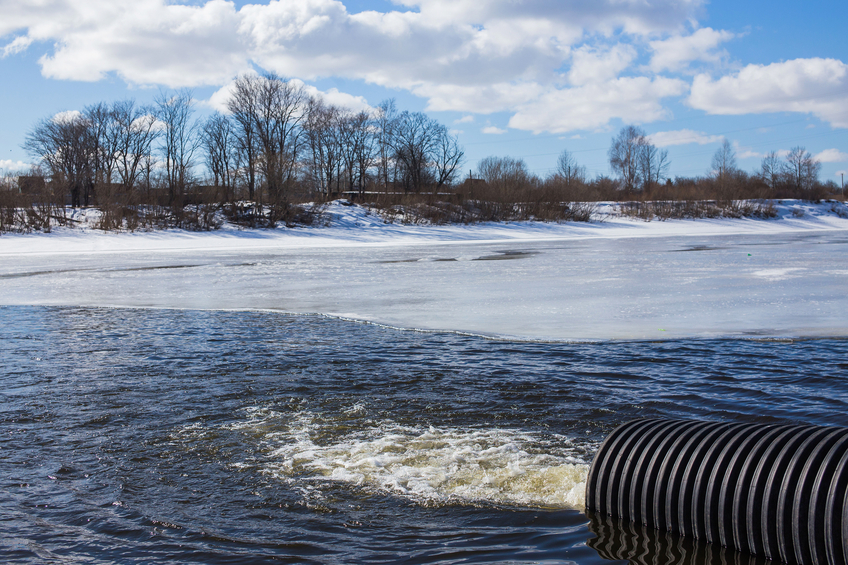
This online engineering PDH offers steps for planning how to prevent and contain stormwater pollution. It offers a step by step guide on what should be included in the plan, as well as helpful tips for how the plan can be maintained, adhered to, and exceeded in order to ensure a high level of quality.
Stormwater runoff is water from rain or snowmelt that does not immediately infiltrate into the ground and flows over or through natural or man-made storage or conveyance systems. When undeveloped areas are converted to land uses with impervious surfaces such as buildings, parking lots, and roads, the natural hydrology of the land is altered and can result in increased surface runoff rates, volumes, and pollutant loads.
This course provides useful tips about maintaining a SWPPP, as well as examples of and foresight into what can go wrong with various different kinds of materials which are commonly found at industrial sites. This includes solids, liquids, and waste. It also provides useful information on how to effectively and efficiently handle stormwater discharge in the event that control measures fail, and information on monitoring pollutants in stormwater discharge.
This 4 PDH online course is applicable to industrial, civil, environmental, and sustainability engineers as well as others interested in gaining a basic understanding about developing a stormwater pollution prevention plan.
This P.Eng. continuing education course is intended to provide you with the following specific knowledge and skills:
- Understanding what causes stormwater pollution and its effects on the environment
- Learning how to prevent and contain stormwater pollution
- Learning how to develop a stormwater pollution prevention plan in order to be in compliance with a National Pollutant Discharge Elimination System permit
- Learning how to analyze the particular pollutants in your stormwater discharge
Upon successful completion of the quiz, print your Certificate of Completion instantly. (Note: if you are paying by check or money order, you will be able to print it after we receive your payment.) For your convenience, we will also email it to you. Please note that you can log in to your account at any time to access and print your Certificate of Completion.
This online engineering PDH course provides basic information on how communities can integrate green infrastructure into their Local Hazard Mitigation Plans.
Communities across the United States are facing a variety of challenges, from outdated infrastructure, to water quality protection, to the need to increase community resilience and mitigate the impacts of flooding and other hazards. These communities are looking for multi-purpose solutions to these challenges.
Green infrastructure is one approach to improve water quality and address flooding challenges. Green infrastructure yields many benefits, including improved water quality, reduced flooding, infrastructure cost savings, and healthier communities. While green infrastructure alone may not fully address these issues, however, it adds capacity, flexibility, and resilience to other infrastructure systems and provides multiple community benefits.
This 2 PDH online course is applicable to civil, environmental and stormwater engineers who are interested in examining how communities can integrate green infrastructure into their Local Hazard Mitigation Plans.
This P.Eng. continuing education course is intended to provide you with the following specific knowledge and skills:
- Familiarizing with the concept of developing a Local Hazard Mitigation Plan
- Understanding the issues, requirements and evolution of stormwater management
- Learning how to integrate green infrastructure into the mitigation planning process
- Identifying important considerations for communities interested in pursuing this approach
- Exploring the green infrastructure integration efforts in the area under study
Upon successful completion of the quiz, print your Certificate of Completion instantly. (Note: if you are paying by check or money order, you will be able to print it after we receive your payment.) For your convenience, we will also email it to you. Please note that you can log in to your account at any time to access and print your Certificate of Completion.

This online engineering CPD course examines the moral frameworks and legal statutes that govern professional engineering practice in Nova Scotia.
This course interprets the core tenets of the official Code of Ethics, emphasizing the paramountcy of public safety, health, and environmental protection in technical decision-making. It navigates the regulatory landscape defined by the Engineering Profession Act and Association By-Laws, detailing the mandates for licensure, the lawful use of professional seals, and mandatory continuing development.
Furthermore, the course examines the administrative mechanics of the complaint and disciplinary process while analyzing real-world case studies, ranging from fraudulent stamping to professional negligence, to illustrate the legal and professional repercussions of ethical failure.
This 3 CPD online course is applicable to Professional Engineers licensed in the Province of Nova Scotia who are required to demonstrate continuing professional competency in engineering ethics as a condition for their license renewal.
This PE continuing education engineering course is intended to provide you with the following specific knowledge and skills:
- Interpreting the fundamental canons of the Nova Scotia Engineering Code of Ethics to ensure engineering conduct aligns with public welfare, integrity, and the environment.
- Navigating the requirements of the Engineering Profession Act regarding membership eligibility, licensing for non-residents, and the mandatory application of professional seals.
- Managing institutional compliance with mandatory continuing professional development (CPD) guidelines and the administrative regulations established by the Council.
- Analyzing the procedural stages of the complaint and disciplinary framework, from the initial investigation by the Complaints Committee to the issuance of formal disciplinary orders.
- Evaluating historical disciplinary cases to identify common ethical pitfalls, such as illegal practice by non-members, technical incompetence, and the impact of criminal convictions on professional standing
In this professional engineering CEU course, you need to review the course document titled “General Principles of Engineering Ethics & Statutes for Nova Scotia Professional Engineers”.
Once you complete your course review, you need to take a multiple-choice quiz consisting of ten (15) questions to earn 3 PDH credits. The quiz will be based on the entire course document.
Upon successful completion of the quiz, print your Certificate of Completion instantly. (Note: if you are paying by check or money order, you will be able to print it after we receive your payment.) For your convenience, we will also email it to you. Please note that you can log in to your account at any time to access and print your Certificate of Completion.