

Nova Scotia Structural & Ethics/Regulatory 30 PDH Discount Package
Tunnel Operations, Maintenance, Inspection, and Evaluation Manual: Inspection (C10-005)
Coastal Construction - Designing the Building (S05-014)
General Principles of Engineering Ethics & Statutes for Nova Scotia Professional Engineers (NS3-001)
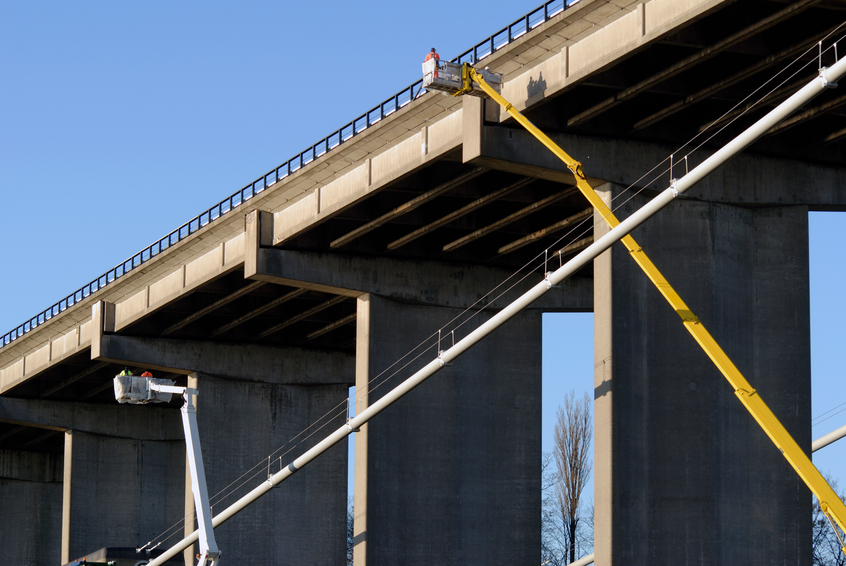
This online engineering PDH course provides basic information on the capabilities of sonar technologies in performing underwater bridge inspections and its benefits in supplementing dive inspectors to improve inspections.
The requirements for underwater bridge inspection procedures using divers are well documented within the U.S. However, some bridge inspectors and owners have increasingly been supplementing dive inspections with acoustic imaging technology to enhance inspection quality, increase safety, increase efficiency, and improve documentation of findings. This trend has accelerated, in part, because of advancements in sonar technology. The trend has also accelerated because site conditions adverse to dive inspections—such as limited underwater visibility, high velocity currents, submerged debris, and extreme water depths—exist at many bridge sites.
Because these adverse conditions can limit a diver’s ability to inspect a bridge below water, many states are investigating the use of sonar technologies for underwater bridge substructure inspection. FHWA provides overall guidance for these inspections and recognized the need for a comprehensive evaluation of the capabilities of sonar technologies for this important activity. In this study, a range of sonar technologies are evaluated in a variety of underwater conditions to determine how these technologies can be effectively used in conjunction with or independently of divers.
This 12 PDH online course is applicable to structural engineers and bridge personnel responsible for inspecting bridge foundations who are interested in applying sonar technologies for underwater bridge inspections.
This P.Eng. continuing education course is intended to provide you with the following specific knowledge and skills:
- Familiarizing with sonar technologies including three-dimensional sonar systems and two-dimensional imaging sonar
- Familiarizing with sonar technology reliability by evaluating variations in the speed of sound, transducer head movement, interference and noise, acoustic multipath,transverse and range resolution, acoustic shadows, slant-range distortion and GPS accuracy
- Learning about technology selection and the strengths and weaknesses of sonar technologies including 3D real-time multibeam, 2D multibeam and 3D mechanical multibeam 2D sector-scanning and 3D profiler and Dive equipment
- Understanding underwater bridge inspection environment for concrete, steel and timber bridges
- Understanding phase I and phase II field testing and evaluating their findings
Upon successful completion of the quiz, print your Certificate of Completion instantly. (Note: if you are paying by check or money order, you will be able to print it after we receive your payment.) For your convenience, we will also email it to you. Please note that you can log in to your account at any time to access and print your Certificate of Completion.

This engineering online PDH course will provide an overview on the inspection of tunnel systems and the associated components.
This course focuses on developing safety inspections for highway tunnels. Some of the essential requirements of the NTIS are summarized to include the responsibilities of the tunnel inspection organization, qualifications of inspection personnel, inspection procedures and practices, and the different types of tunnel inspections. This course also explores health and safety issues for inspectors, inspection equipment, typical tunnel defects, owner defined elements, critical findings, and condition ratings. A glossary of selected terms and a list of references is also included at the end.
This 10 PDH online course is applicable to civil and structural engineers, as well as design and construction personnel involved with the inspection process of tunnel systems.
This P.Eng. continuing education course is intended to provide you with the following specific knowledge and skills:
- Understanding the inspection criteria and methods of tunnel systems
- Identifying the typical roles and personnel involved in tunnel inspection processes
- Understanding the roles, requirements, and scope of work of those involved
- Familiarizing with different inspection methods and techniques
- Learning about the health and safety considerations
- Understanding the basics of cost estimating
- Familiarizing with the equipment used in tunnel inspections
- Learning about the recommended actions upon critical findings
Upon successful completion of the quiz, print your Certificate of Completion instantly. (Note: if you are paying by check or money order, you will be able to print it after we receive your payment.) For your convenience, we will also email it to you. Please note that you can log in to your account at any time to access and print your Certificate of Completion.
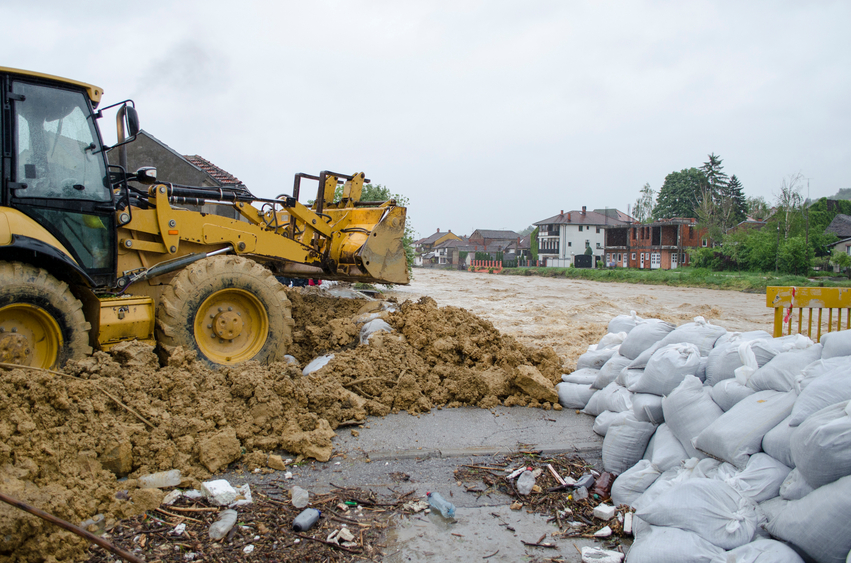
This online engineering PDH course provides the design professional with sufficient background and examples for effectively designing a residential building proposed to be constructed in a coastal hazard area. The designer will find that engineering judgment will need to be applied to a range of issues which will arise during the design of a coastal residential building. This course describes the design process which involves the following:
- Determining design loads
- Determining the building’s foundation, structural frame, and envelope
- Determining the connections between individual elements
- Determining the elevation, placement, and support for utilities
- Selecting the appropriate materials
In this course, the recommended design method is Allowable Stress Design (ASD), so there are factors of safety (FS) built into the development of the material stresses and the forces at the connections. This design method has been chosen for this manual because ASD continues to be the predominant design method in light-frame, residential, wood construction.
This 5 PDH online course is intended for structural engineers, design and construction personnel and other technical professionals who are involved in coastal construction projects.
This P.Eng. continuing education course is intended to provide you with the following specific knowledge and skills:
- Understanding the design process
- Determining site-specific loads
- Applying loads to the building
- Determining forces at connections and stresses in materials
- Developing connections at each link
- Selecting building materials
- Designing for the building envelope
- Designing for electrical and mechanical equipment
- Designing for appurtenant structures
Upon successful completion of the quiz, print your Certificate of Completion instantly. (Note: if you are paying by check or money order, you will be able to print it after we receive your payment.) For your convenience, we will also email it to you. Please note that you can log in to your account at any time to access and print your Certificate of Completion.

This online engineering CPD course examines the moral frameworks and legal statutes that govern professional engineering practice in Nova Scotia.
This course interprets the core tenets of the official Code of Ethics, emphasizing the paramountcy of public safety, health, and environmental protection in technical decision-making. It navigates the regulatory landscape defined by the Engineering Profession Act and Association By-Laws, detailing the mandates for licensure, the lawful use of professional seals, and mandatory continuing development.
Furthermore, the course examines the administrative mechanics of the complaint and disciplinary process while analyzing real-world case studies, ranging from fraudulent stamping to professional negligence, to illustrate the legal and professional repercussions of ethical failure.
This 3 CPD online course is applicable to Professional Engineers licensed in the Province of Nova Scotia who are required to demonstrate continuing professional competency in engineering ethics as a condition for their license renewal.
This PE continuing education engineering course is intended to provide you with the following specific knowledge and skills:
- Interpreting the fundamental canons of the Nova Scotia Engineering Code of Ethics to ensure engineering conduct aligns with public welfare, integrity, and the environment.
- Navigating the requirements of the Engineering Profession Act regarding membership eligibility, licensing for non-residents, and the mandatory application of professional seals.
- Managing institutional compliance with mandatory continuing professional development (CPD) guidelines and the administrative regulations established by the Council.
- Analyzing the procedural stages of the complaint and disciplinary framework, from the initial investigation by the Complaints Committee to the issuance of formal disciplinary orders.
- Evaluating historical disciplinary cases to identify common ethical pitfalls, such as illegal practice by non-members, technical incompetence, and the impact of criminal convictions on professional standing
In this professional engineering CEU course, you need to review the course document titled “General Principles of Engineering Ethics & Statutes for Nova Scotia Professional Engineers”.
Once you complete your course review, you need to take a multiple-choice quiz consisting of ten (15) questions to earn 3 PDH credits. The quiz will be based on the entire course document.
Upon successful completion of the quiz, print your Certificate of Completion instantly. (Note: if you are paying by check or money order, you will be able to print it after we receive your payment.) For your convenience, we will also email it to you. Please note that you can log in to your account at any time to access and print your Certificate of Completion.